
I’d always heard good things about Austin from friends and family who visited there so when I first had the chance to go for a work conference I made sure to leave plenty of time for sightseeing. The focal point of the city is the Town Lake/Colorado River that fronts the downtown–on my second trip I definitely made a point of renting a kayak to go out on it. But there is also a tone of Texas history here with it being a state capital and major university town. The vibe is famously laid back but not in a slow Southern way–instead you see it in green spaces full of runners, trendy food trucks with vegan tacos, and tech like sushi delivery robots and driverless cars. (2025, 2026)


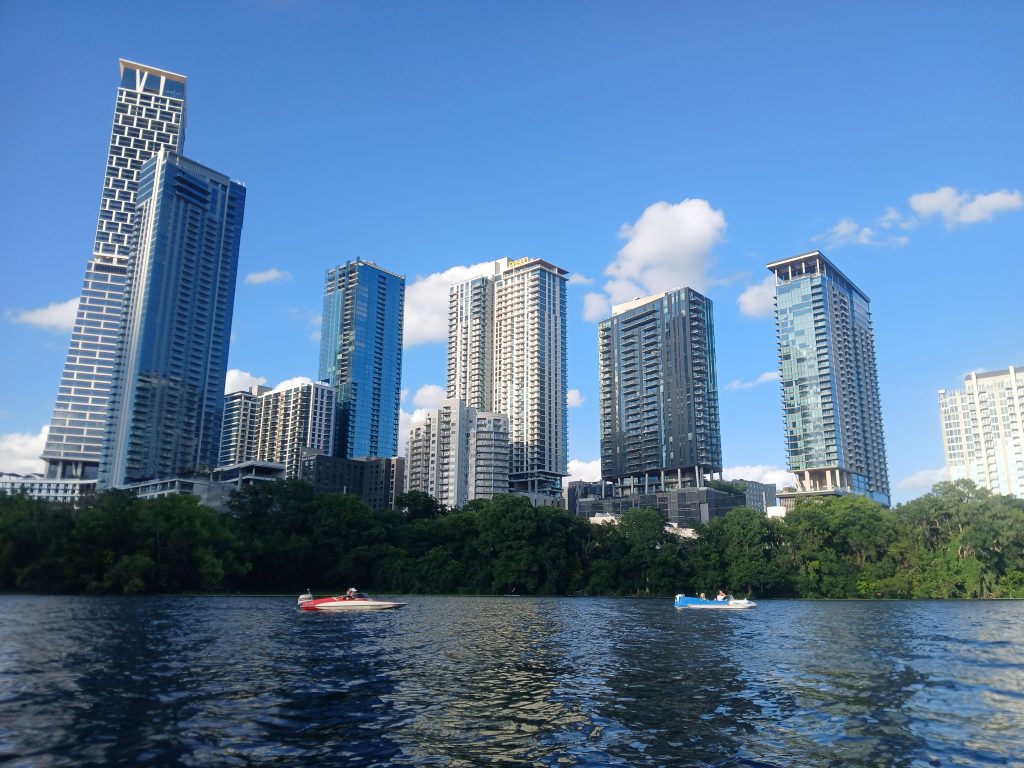
Texas’s Colorado River (not the one of the Grand Canyon fame) runs right alongside the site of Austin’s downtown skyline, most of which has only arisen in the last few decades.

One surprising thing Austin has become known for is the nightly flight of millions of bats inhabiting the Congress Street Bridge over the river since the1980s. Even with that number they are hard to see as the follow the shadows of the bridge and trees, but our great boat tour guide showed us where to look.


I have always loved the history of the 1960s in which President Lyndon B. Johnson figures prominently. The LBJ Presidential Library and Museum is chock full of important items and archived documents from his era as well as interesting recordings of his many phone conversations.


The core of downtown is an interesting mix of old and new buildings–skyscrapers fronted by old brick buildings from the Mexican era, for example. Another area kept in its original old style is along 6th, Austin’s version of Bourbon Street.


Another well known destination in Austin is the pool fed by a natural spring known as Barton Springs
The University of Texas at Austin is perhaps most prominently known for its Longhorns football but the campus itself is quite nice as well with a lot of old and interesting architecture. It was also interesting to see the infamous tower that is a symbol of the university but also famous for its role in the tragic campus shooting of 1966.

